Strength, mobility, energy and recovery
Build capacity for the life ahead.
Healthspan is about having the strength, energy, clarity and connection to keep doing what matters to you—not simply adding years to the calendar.
Add more life to the years—not only more years to life.
Healthspan is the part of life spent with the physical, mental and social capacity to do what matters to you. It grows through ordinary habits that support one another.
Read the WHO perspectiveAttention, adaptability, mood and purpose
Connection, contribution and independence
Five parts of a life that work together.
Begin where your life has the clearest opening. Better sleep supports movement. Community helps habits last. Growth gives them direction.
Exercise
Build strength for the life you want to keep living.
Movement creates physical reserve. Aerobic activity supports endurance, while strength, power, mobility and balance help protect the everyday abilities that make independence possible.
minutes of moderate aerobic activity each week is the WHO range for adults.
WHO physical activity guidanceof muscle-strengthening activity each week is also recommended for adults.
WHO physical activity guidanceBegin below the target if needed: add one brisk 10-minute walk today and schedule two short full-body strength sessions this week.
Sleep
Protect the recovery that makes everything else work.
Sleep is active maintenance, not leftover time. Enough high-quality sleep supports attention, memory, mood, metabolism, immune function and physical recovery.
is the daily recommendation for most adults ages 18–60.
CDC About Sleepbefore bed is when the CDC suggests turning off electronic devices.
CDC About SleepChoose a regular wake time first. Then work backward to create enough room for sleep and a calmer final half-hour.
Nutrition & supplementation
Let food build the foundation. Give supplements a defined job.
A varied eating pattern provides energy, protein, fibre, fats, vitamins, minerals and the pleasure of shared meals. Thoughtful supplementation can help close a genuine gap or support a well-defined goal; it should not replace the fundamentals.
vegetables and fruits is the visual starting point in Canada’s Food Guide.
Health Canada food guide platewhole grain foods and protein foods complete the food guide plate.
Health Canada food guide plateAt your next meal, add one plant food and one dependable protein source. Then review supplements against an actual need—not a trend.
Understand omega-3s, magnesium, multivitamins, protein, creatine and vitamin D without the hype.
Community
Make belonging part of the health plan.
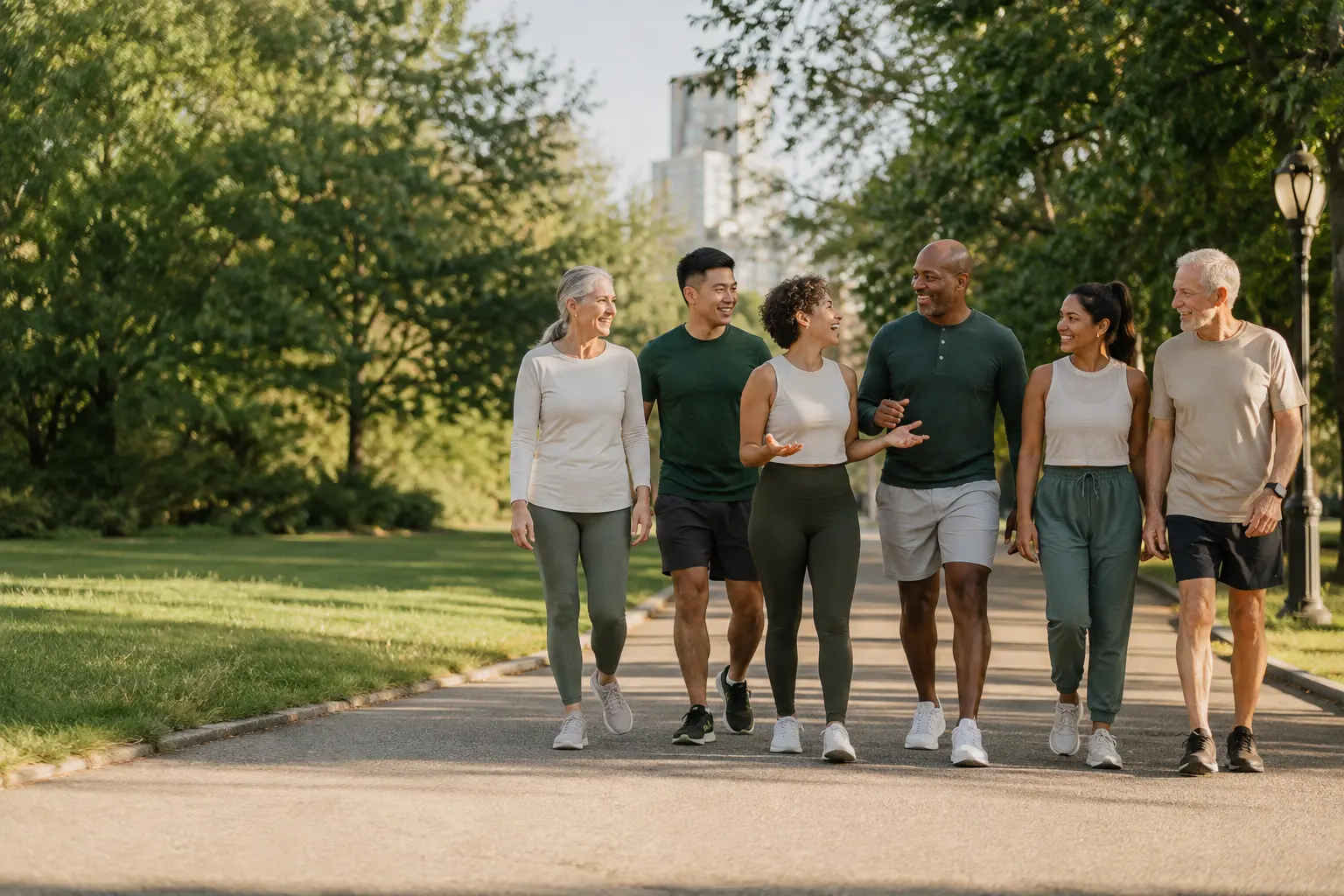
Relationships provide encouragement, accountability, perspective and meaning. Shared routines—walks, meals, classes, volunteering or regular conversations—can make healthy behaviour easier to repeat.
people globally report loneliness, according to the WHO’s 2025 estimates.
WHO social connection Q&ASocial isolation and loneliness can harm both physical and mental health.
WHO social connection Q&APut one recurring connection on the calendar—a walk, meal, class, call or volunteer shift—and protect it like any other health appointment.
Personal growth
Keep giving your health a reason and a direction.
Learning, reflection, creativity and meaningful challenge help life remain expansive. Personal growth turns healthspan from a defensive goal into the capacity to keep contributing, adapting and becoming.
Meaningful activities may support cognitive health, although lasting effects are not yet definitive.
National Institute on AgingThe NIA suggests taking a class or joining a club to learn something new.
NIA healthy-aging tipsChoose one skill, question or meaningful project. Define the smallest visible step you can finish this week.
What can you do today?
Check off what serves you. If the full list feels like too much, choose two. The goal is a pattern you can return to—not a perfect score.